
 Follow us on LinkedIn
Workforce planning has officially moved from “nice to have” to “we can’t run the business without it.” Hiring plans don’t live in isolation anymore. They’re tied to:
- Budgets
- Shifting customer demand
- New regulations
- AI disruption
- Internal mobility
- Skills shortages
- The constant pressure to do more with less
So, workforce planning tools have become one of the most important investments for modern HR and people operations teams.
These platforms help you forecast headcount, model scenarios, understand skill gaps, track capacity, and stay aligned to business strategy, all without everything falling apart the moment something changes.
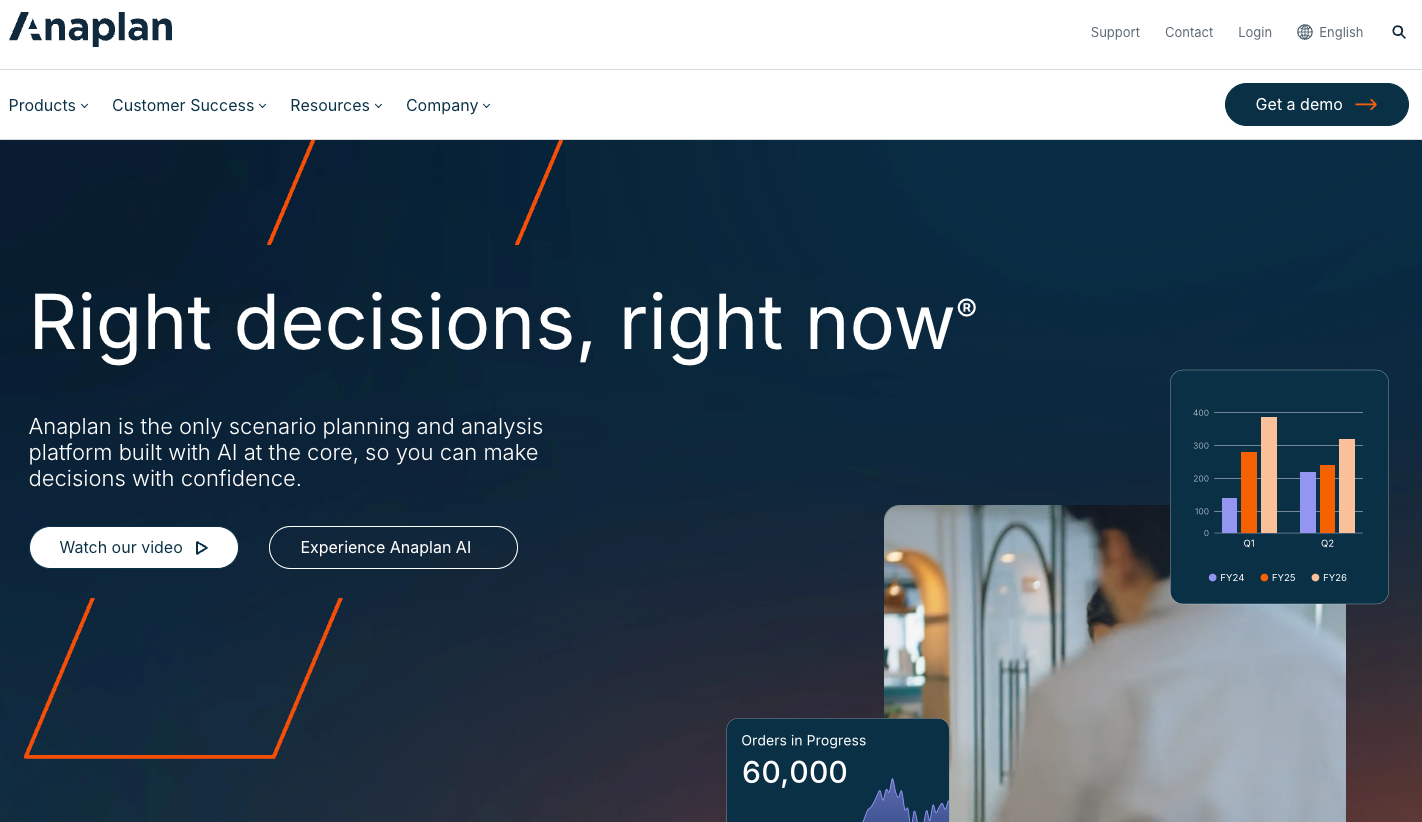
1. Anaplan: Connected workforce planning at enterprise scale
If you’re looking for a workforce planning tool that can plug directly into complex enterprise planning, Anaplan is one of the biggest names in the space, and for good reason.
This tool positions itself as a platform that supports workforce planning through AI-driven connected planning and scenario modeling, helping teams align decisions across HR and the broader business.
What makes Anaplan particularly useful is how deeply it can connect workforce planning inputs (like headcount, roles, compensation, hiring timelines, and organizational structures) to larger business drivers like revenue, capacity targets, productivity assumptions, and regional growth.
This is where workforce planning tools really prove their worth: when they don’t live in HR-only land.
When we’re operating across multiple regions, business units, job families, and cost centers, planning gets messy fast.
Anaplan can handle that complexity, while still allowing leaders to run “what-if” scenarios and understand trade-offs without guessing.
For companies with mature finance planning processes, Anaplan can be a natural fit because it speaks the language of structured planning, collaboration, and controlled governance.
2. Workday Adaptive Planning: Workforce planning where HR and finance meet
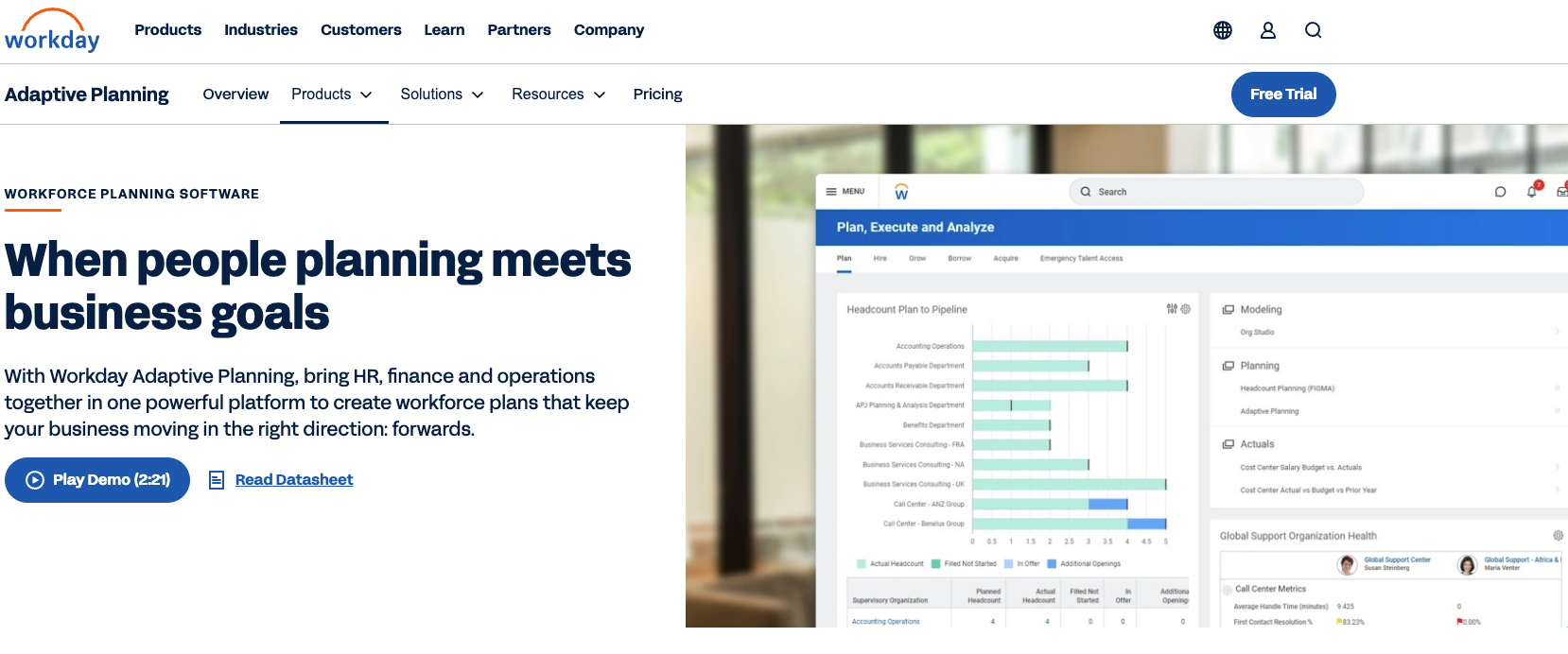
Workday Adaptive Planning has become a popular choice for companies that want workforce planning tightly tied to budgeting and forecasting.
Workday frames its workforce planning offering as a way to bring HR, finance, and operations together in a single platform to create workforce plans that support business goals.
That “together” part is the whole game.
Because we’ve all seen what happens when HR builds a hiring plan that finance can’t fund.
Or finance builds a budget that ignores the reality of talent constraints. Or operations sets targets without understanding whether staffing levels can actually support them.
With this tool, you can unify assumptions and make workforce planning more dynamic.
Instead of updating headcount plans once or twice a year, you can work with rolling forecasts, respond to changes quickly, and understand downstream budget implications in real time.
This is especially valuable in fast-moving industries where demand swings hard (like SaaS, retail, services, healthcare, or logistics) because workforce decisions often need to happen faster than annual planning cycles.
3. Orgvue: Workforce planning built for org design and transformation
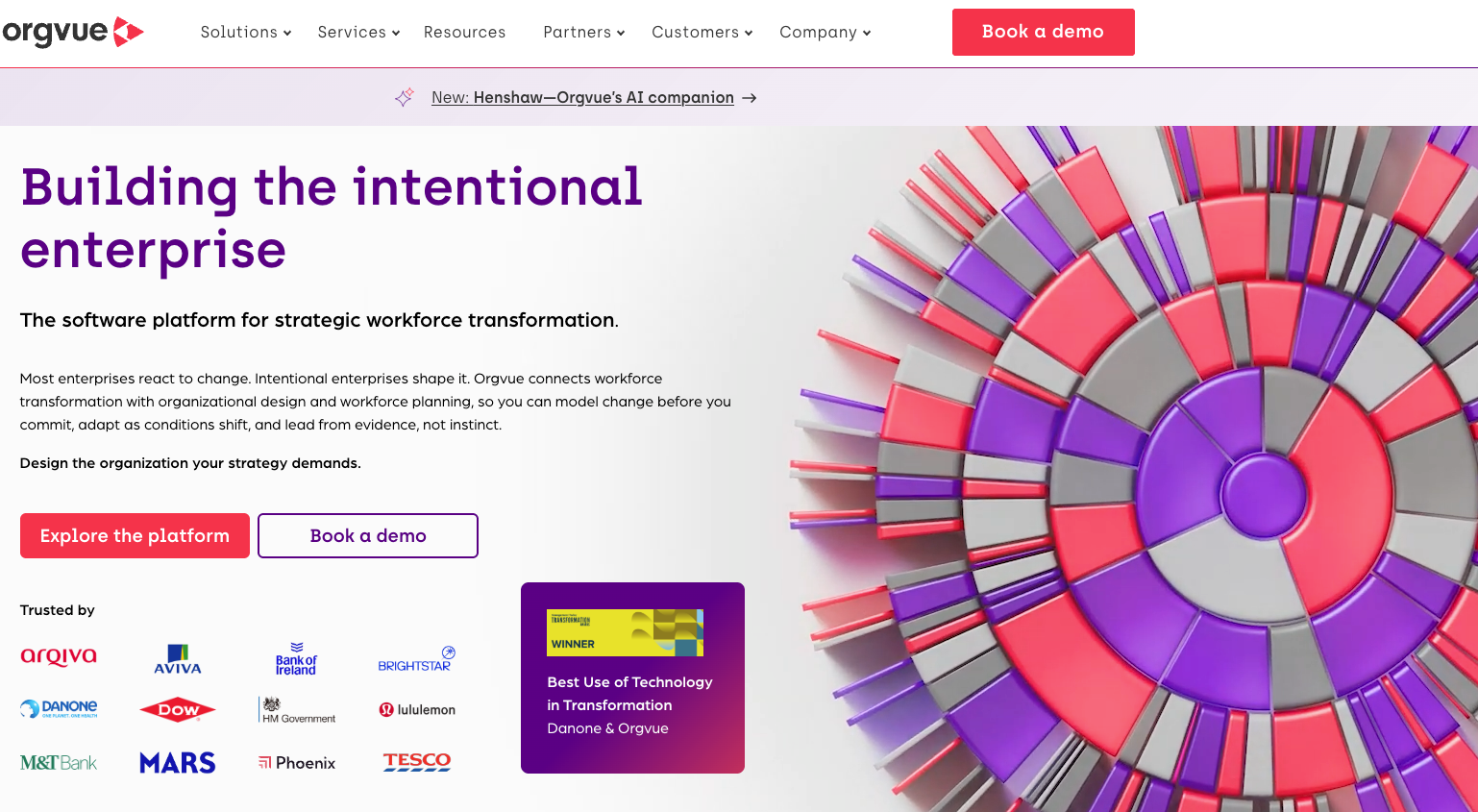
Orgvue is one of the strongest workforce planning tools for companies that care deeply about organizational design, restructuring, and workforce transformation.
Orgvue describes itself as a platform that connects workforce transformation with organizational design and workforce planning so teams can model change before committing.
And honestly, that “model before committing” capability is what modern workforce planning should always be about.
Because reorganizations, role redesigns, and cost transformations are expensive and risky.
Even small changes can create unintended consequences, such as span-of-control issues, manager overload, duplicated responsibilities, skill gaps, or budget overruns.
Orgvue shines when you need to plan:
- Reorganizations and operating model shifts
- Workforce cost modeling by role, team, or region
- Strategic workforce planning linked to business strategy
- Capacity planning and workforce capability alignment
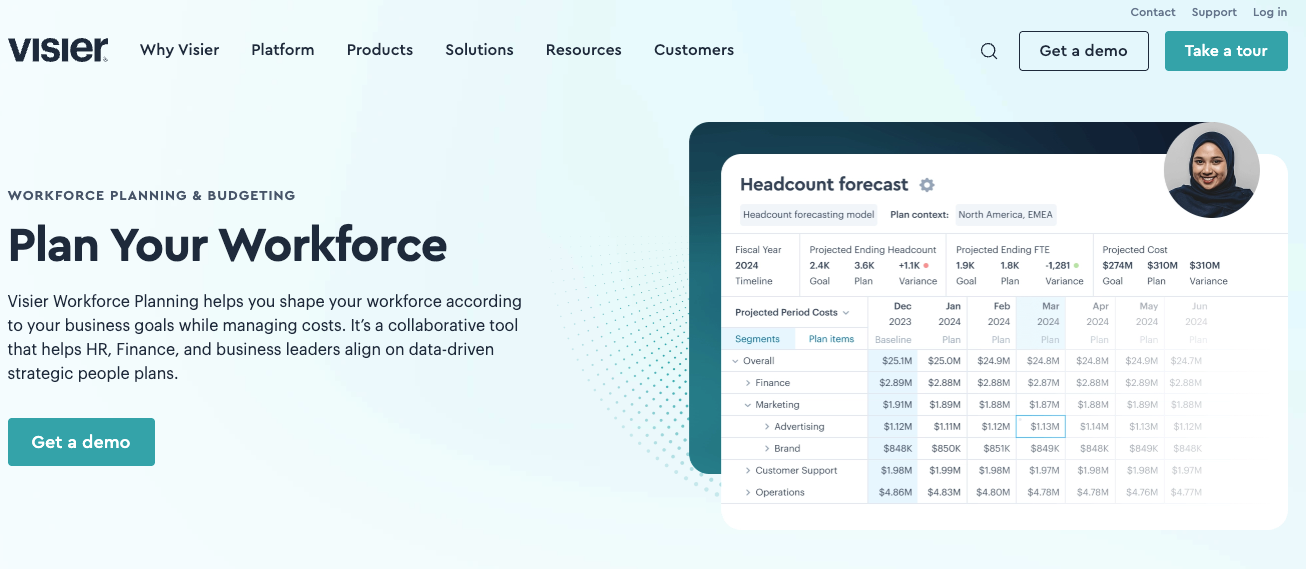
4. Visier: Analytics-driven workforce planning that’s always current
Visier has built a strong reputation in people analytics, and it’s expanded that into workforce planning.
Visier’s workforce planning solution focuses on helping teams answer strategic workforce questions, model future scenarios, and forecast the workforce using predictive approaches.
The reason this matters is because workforce planning is only as good as the decisions behind it. And decisions are only as good as the data.
In practice, this makes Visier a strong choice if you want workforce planning to be greatly informed by:
- Attrition risk trends
- Productivity patterns
- Hiring funnel realities
- Compensation benchmarks and equity signals
- Skills availability and internal movement
- Business outcomes tied to workforce investments
5. ChartHop: The planning tool that makes org data feel usable
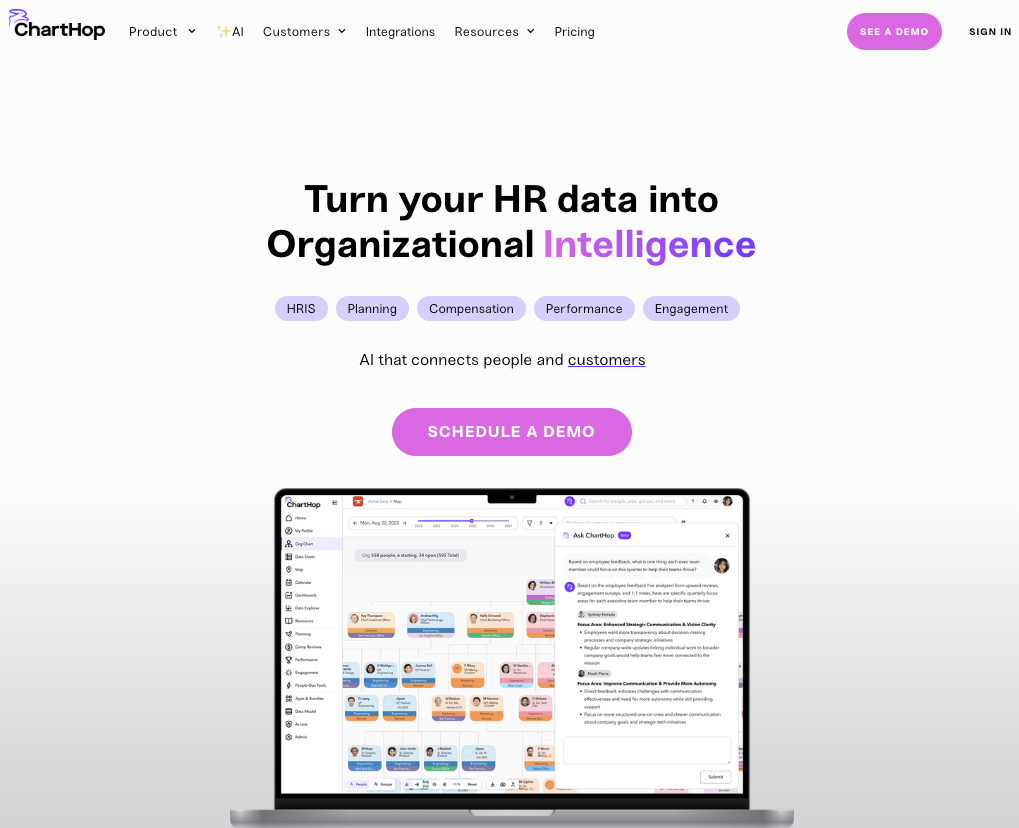
ChartHop has carved out a strong identity around bringing workforce visibility and planning together with org visualization.
A lot of workforce planning breaks down because leaders don’t actually understand what the organization looks like today, never mind where it’s going tomorrow.
And org charts alone rarely help because they don’t show budget impact, comp structure, headcount trends, or scenario outcomes.
ChartHop is often used to make workforce planning more approachable by giving teams a way to visualize org structure, build scenarios, and share workforce insights in a way that doesn’t require everyone to become an HR analytics expert.
This can be a fantastic fit for scaling companies that have moved beyond “just hire fast” and want to build sustainable organizations (where you need consistency, forecasting, and cost control without losing agility).
6. Planful: When workforce planning needs FP&A muscle
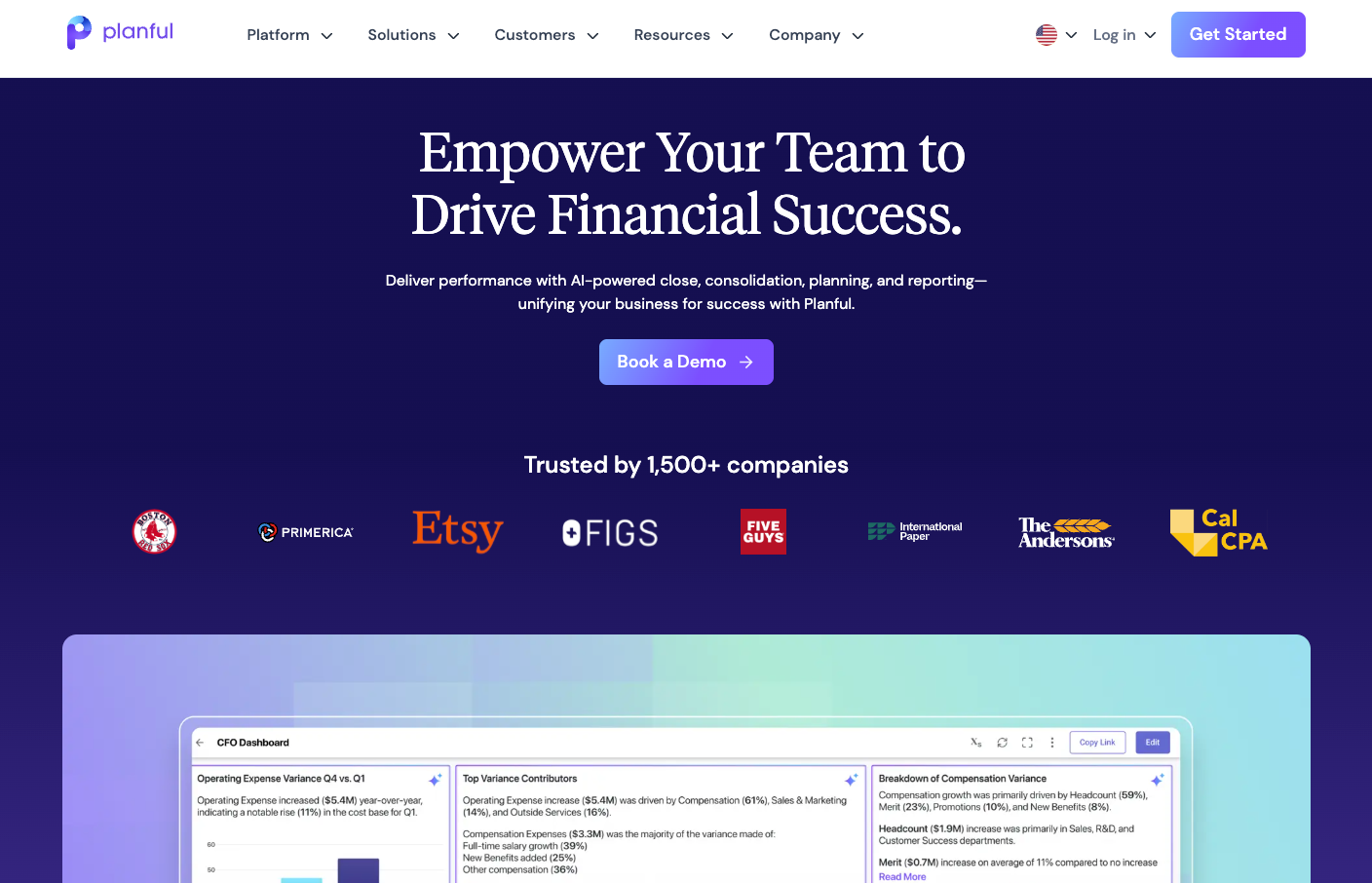
Planful is frequently used in finance-led planning environments where workforce planning is tightly connected to financial forecasting and budgeting.
That’s important because workforce is one of the biggest costs in a company. So if workforce planning tools aren’t closely integrated with planning cycles, the whole business ends up planning with blind spots.
Planful supports planning workflows that can help you link hiring plans, compensation changes, and resourcing scenarios to budgets and forecasts in a structured way.
Where Planful tends to shine is in companies that want:
- Fast forecasting cycles without brittle spreadsheets
- Strong control over planning assumptions and workflow approvals
- Better collaboration across finance, HR, and department leaders
- A planning approach that scales as the organization grows
Workforce planning becomes much easier when the tool can handle not only “how many people do we need?” but also “how do we fund it, and what’s the cost impact over time?”
7. Board: Enterprise planning that can tie workforce to everything else
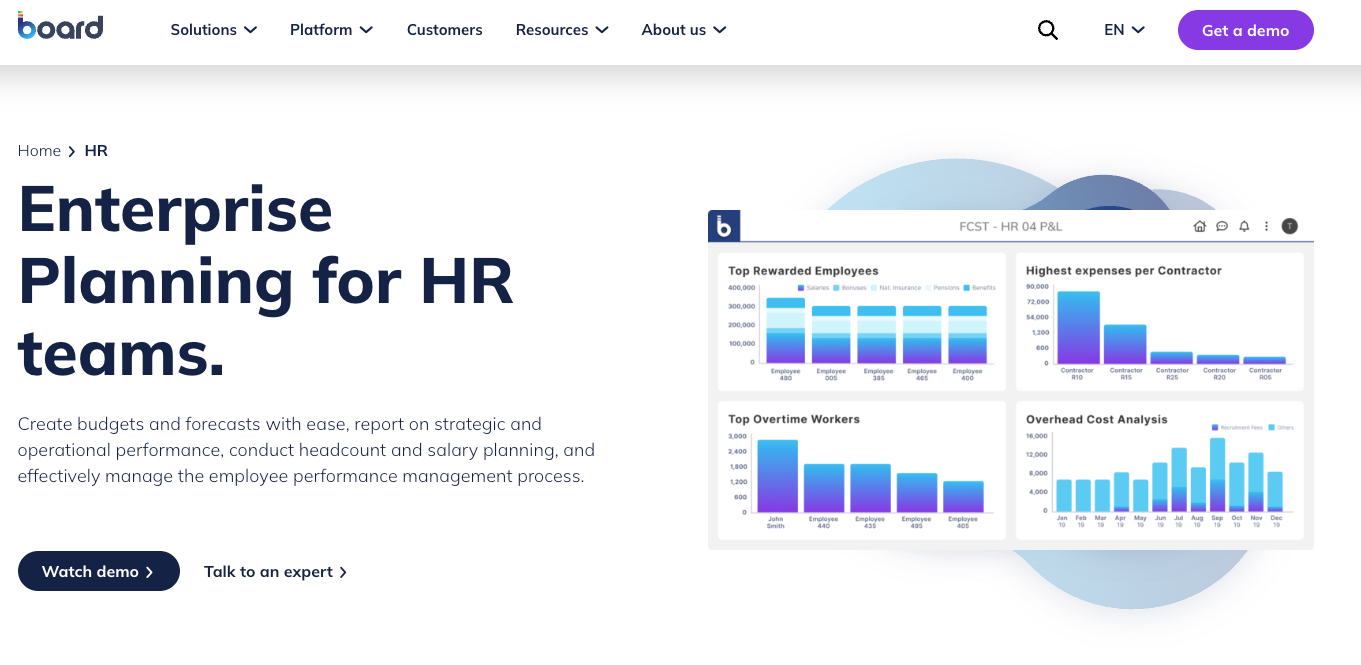
Board is another heavyweight in the enterprise planning space, often used for financial and operational planning, but relevant for workforce planning as well when organizations need that unified view.
This matters because the most effective workforce planning doesn’t live separately from:
- Sales forecasts
- Production or fulfillment capacity
- Customer demand models
- Regional expansion plans
- Product roadmap changes
This tool can support a more holistic approach to workforce planning by allowing you to model how workforce decisions influence (and are influenced by) broader business planning.
This becomes especially valuable for large companies that need multi-department alignment; consistency in definitions, metrics, and decision logic; scenario modeling that includes financial and operational assumptions; and more.
8. Runn: Resource and capacity planning that feels refreshingly practical
You don’t always need enterprise-level strategic forecasting. Sometimes you just need to understand capacity, staffing coverage, and delivery constraints, especially in services-heavy environments.
That’s where a tool like Runn earns its spot in a modern planning stack.
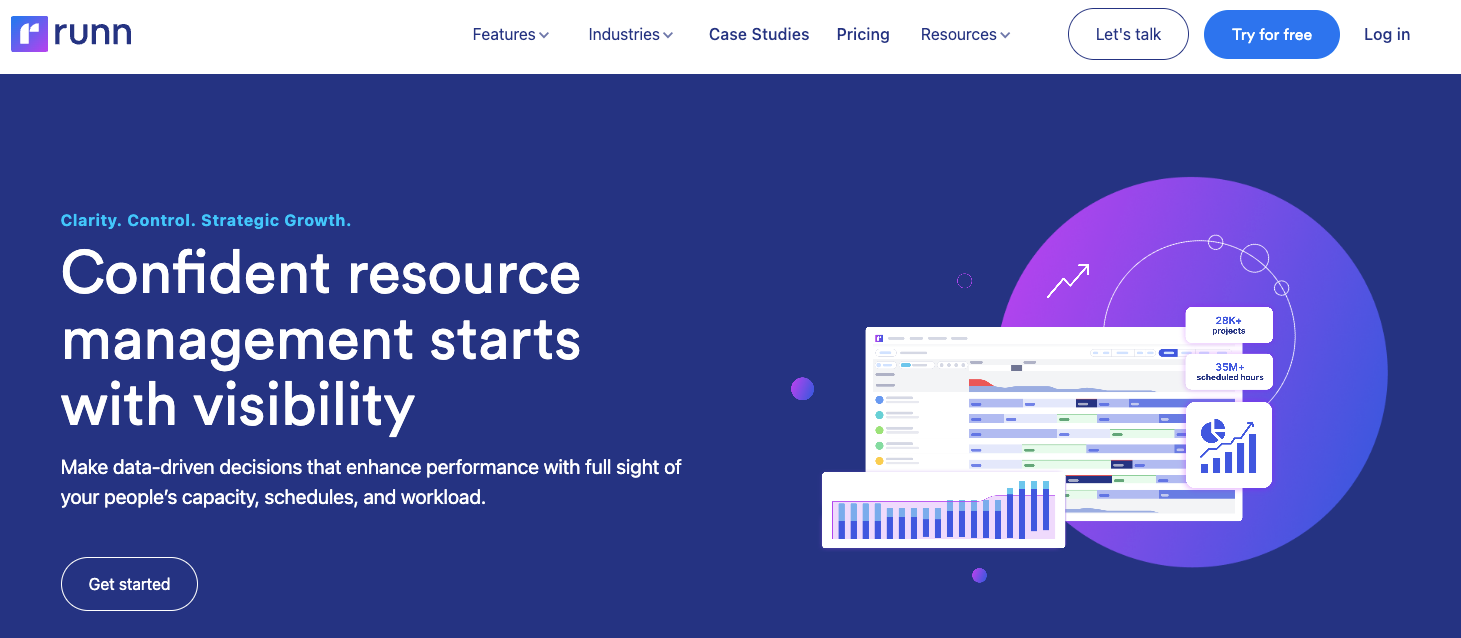
Runn is widely used for resource planning, helping teams figure out who’s available, what work is coming, and where capacity gaps or overload risks exist.
This is incredibly valuable for companies where workforce planning is directly tied to project delivery, billable hours, or throughput.
For professional services, agencies, consultancies, and IT delivery teams, this kind of real-world capacity planning often matters more than abstract headcount targets.
9. Quinyx: Workforce planning for deskless and frontline teams
Traditional “strategic workforce planning” platforms often aren’t built for:
- Shift patterns
- Demand-based staffing
- Labor compliance constraints
- Coverage and scheduling realities
- Real-time operational staffing changes
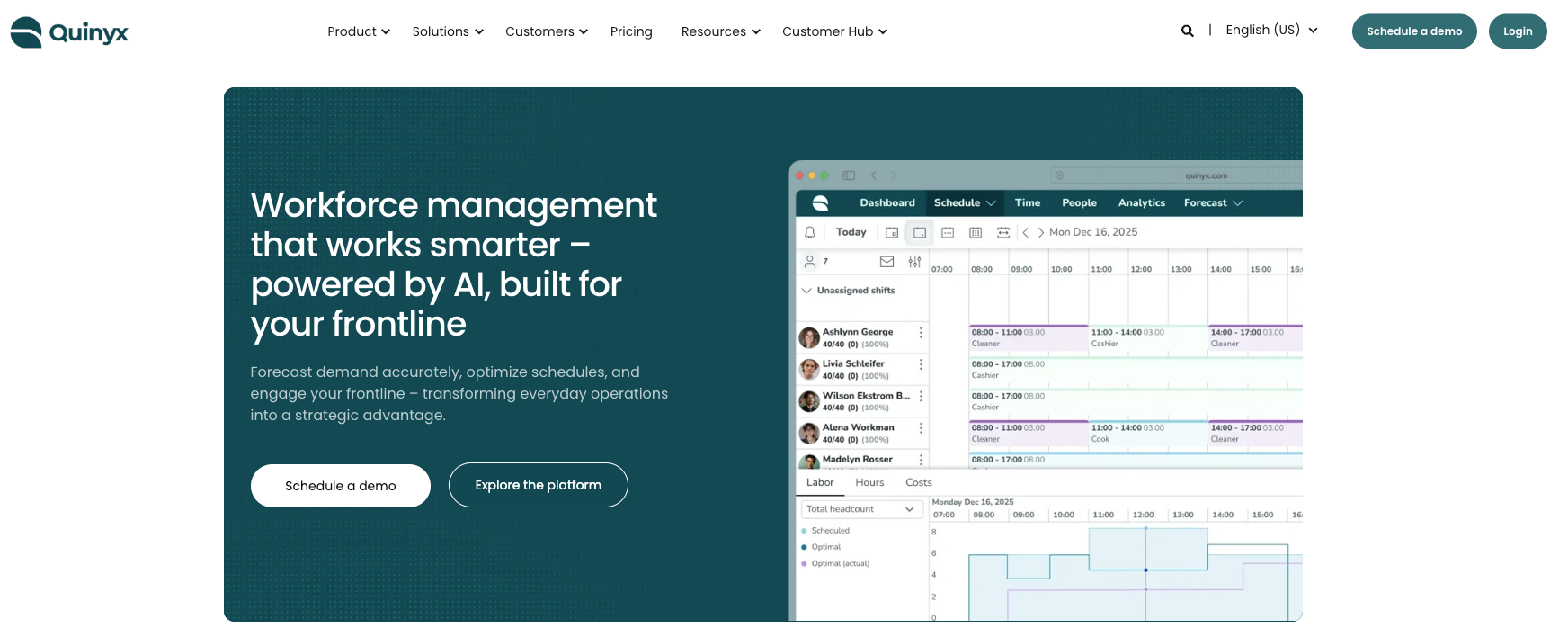
Quinyx is known in the workforce management and scheduling space, and supports companies with frontline staffing needs.
For industries like retail, hospitality, logistics, and healthcare, this is essential. Because the workforce plan isn’t just “hire 200 people this quarter.” It’s “make sure every site has enough coverage every day, across every shift, without overspending or burning people out.”
TL;DR
With so many workforce planning tools available, it’s tempting to pick the one with the most features and call it a day.
But the better approach is choosing based on how workforce planning actually works inside your company.
The right workforce planning tools help you move from reactive staffing decisions to intentional workforce strategy.
They give you a clearer view of capacity, capability, and cost, and allow you to model change before you commit.
Sign up to our (free) Insider plan to access dozens of templates and exclusive content designed to help you run your day-to-day smoothly.
 People Alliance