
 Follow us on LinkedIn
I fundamentally believe the world of work has become too forgettable.
We move from meeting to meeting, email to email, initiative to initiative, and very little of it sticks. Someone in the audience mentioned getting hundreds of emails a day, and that perfectly captures the problem. Work can easily become noise.
That is why I care so deeply about learning culture and joy.
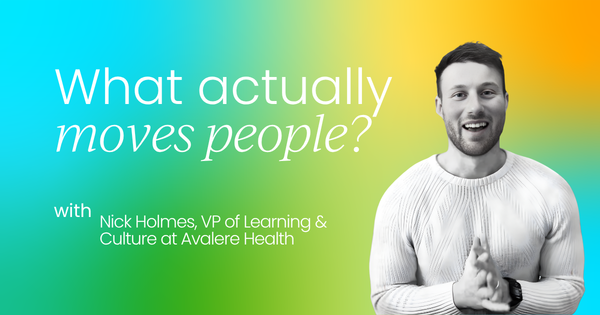
I’m Nick Holmes, Vice President of learning culture at Avalere Health, where we focus on helping improve access and care for patients. I’m also currently completing a PhD exploring the relationship between learning, culture, and organizational growth.
My hypothesis is simple: learning shapes culture in a way that directly drives growth. I want to make that connection undeniable because I believe people, learning, and talent functions do far more than support organizations.
We help grow them.
And we do that by creating moments people actually remember.
 Sabrinthia Donnelly
We remember how work makes us feel
One of my favorite ways to get people thinking about culture is to ask them to imagine their organization as a Netflix show. If your culture had three words underneath it, what would they be?
People often respond instinctively. Words like “playful,” “innovative,” “human,” “chaotic,” or “growth-oriented” come up quickly.
What matters isn’t just the words themselves. It’s why people choose them.
We don’t remember what people do nearly as much as we remember how they make us feel.
If someone describes a culture as playful, it’s usually because they remember moments that made them laugh. If they describe it as chaotic, they’re remembering the emotional experience of constant change or uncertainty.
Feelings shape memory. That’s why joy matters so much at work.
Work takes up too much of our lives not to matter
When you map out the average working lifespan of an adult and then layer in sleep, work takes up an enormous portion of our lives.
But it’s not just the hours themselves. Work affects our energy, relationships, mental health, and the quality of the time outside of work too.
That’s why joy at work isn’t a luxury.
Research consistently shows that purpose and joy influence wellbeing, engagement, and performance.
We know bonuses and pay raises only create temporary spikes in engagement before people adapt. We know our relationships at work affect our relationships at home. We know managers have a huge impact on our mental health.
And with many people now working longer than ever, we have to rethink what kind of experience work actually creates for people.
Teresa Garanhel
The chemistry behind joy
Joy isn’t just an abstract feeling. There’s biology behind it.
The experience of joy is connected to chemicals like dopamine, oxytocin, serotonin, and endorphins.
Dopamine gives us that sense of achievement. Oxytocin creates trust and connection. Serotonin supports calm confidence, while endorphins come through movement and energy.
Learning experiences can activate all of them when they’re designed intentionally.
Even something simple like standing up, sharing ideas, moving around a room, laughing together, and feeling heard can trigger those responses. For a brief moment, people feel connected, energized, and engaged.
That matters because learning done well is more than knowledge transfer. For me, it’s the closest thing we have to a biological upgrade in the workplace.
Joy drives performance
I often think about a story Simon Sinek shared comparing the top five tennis players in the world with the top twenty-five.
They all had elite coaching, discipline, and training. The biggest difference was mindset. The top performers seemed to genuinely enjoy the game. When they scored a point, they experienced joy.
That’s important because joy changes performance.
In our roles, we should be creating experiences where people think, “That felt good. I want to do that again.” Positive change becomes sustainable when people feel emotionally connected to it.
Sabrinthia DonnellyCulture is the collective brain of an organization
I see culture as the collective brain of an organization.
Like the human brain, culture is messy, evolving, and shaped by repetition. It remembers what we practice and slowly removes what we neglect. It’s constantly adapting.
When culture is healthy, accountability, learning, innovation, empathy, and collaboration start happening more naturally. People don’t need to be forced into every behavior because the culture reinforces them automatically.
At Avalere Health, this became especially important because we brought together twenty different agencies, each with their own ways of working, values, and identities. We needed something that could unite people intentionally.
That’s why we created what we call our code: clarity, outcomes, different, and empathy.
Designing culture intentionally
Clarity is about focusing on what matters most.
Outcomes are about understanding why something matters and how it connects to growth. I believe learning teams only really have two jobs: grow the business and provide joy.
Different is about resisting the pressure to become average. The world constantly pushes organizations toward sameness, but novelty and surprise are powerful because they create emotional reactions and stronger memories.
Empathy is about remembering that none of this is really about us. It’s about the people experiencing the change, the learning, or the culture we’re trying to create.
That mindset shift matters. The moment you stop designing for yourself and start designing for people, your impact changes.
Shout, sing, whisper
One of the frameworks we use internally is called shout, sing, whisper.
“Shout” refers to the big, bold initiatives people will remember. “Sing” is about the repeated rhythms that reinforce culture over time. “Whisper” focuses on the everyday behaviors that slowly embed change into how people work.
Through these approaches, we’ve seen measurable improvements in engagement, skill development, recall, and employee sentiment.
People who participated in intentionally designed learning experiences reported significantly higher levels of positive sentiment than those who hadn’t yet experienced them.
Joy works when it’s designed well.
Start small and stay curious
One of the most important things I’ve learned is that meaningful culture change rarely starts perfectly.
There’s a brilliant clip of Ed Sheeran playing an old recording of himself before he became successful. He shares it to make a point: people assume talent is natural, but mastery comes from practice.
The same is true for culture, leadership, and learning.
You don’t have to get everything right immediately. You just have to begin intentionally.
Teresa Garanhel
Finding joy in the work
I genuinely see this work as a calling.
Part of that comes from my family. I’m incredibly lucky to have my wife, my daughter Aurora, and my son Blake. They ground me in what actually matters.
Another part comes from curiosity. On the way to the event, I listened to a podcast about a woman who had twice been incorrectly told she had terminal cancer. After being told to “live every day like it’s your last,” she realized that advice didn’t work for her. Instead, she chose to live every day like it was her first.
That idea stayed with me because it reframes life around curiosity rather than pressure.
I think that applies to work too.
There will always be stress, emails, and challenges. Life is heavy sometimes. But there are still moments of joy everywhere if we’re willing to notice them: a conversation, a laugh, a blue sky on a cold morning, a team succeeding together, someone feeling seen.
Your inner monologue shapes how you experience the world. So when joy starts slipping away, reconnect with the small moments that bring you back to being present.
Because ultimately, the work we do is too important to simply let it pass us by.
We have the opportunity to create workplaces people remember. We can design learning that genuinely moves people. And if we do it well, we don’t just help organizations grow. We help people feel more human while they do it.
This article is based on Nick's brilliant talk at the our Chief People Officer Summit London.
Find all our upcoming events here and come listen to (and learn from) people leaders from top orgs all over the world.