

 Follow us on LinkedIn
If you've spent any time in a people leader role, you've probably heard the phrase "our people are our greatest asset" more times than you can count.
But saying it and actually acting on it are two very different things.
People development is where that gap either closes or widens, and right now, the data suggests a lot of organizations are still struggling to close it.
 Sabrinthia Donnelly
What is people development, exactly?
At its core, people development refers to the ongoing process of helping employees grow their skills, knowledge, capabilities, and confidence so they can perform better in their current roles and prepare for future ones. It's broader than training.
It's broader than performance management because it's the intentional, sustained effort to invest in the human beings who make your organization function.
People development encompasses everything from structured learning programs and mentorship to coaching conversations, stretch assignments, career pathing, and leadership development pipelines.
When it's done well, it doesn't just benefit the individual employee; it creates a more capable, more engaged, and more resilient organization as a whole.
Where people development differs from a traditional "L&D program" is in its mindset.
A training program delivers content. People development builds people. One is transactional; the other is relational, long-term, and tied closely to purpose and growth.
 Teresa Garanhel
Why people development has never mattered more
The urgency around people development right now isn't just an HR talking point. The numbers paint a stark picture of what happens when organizations get this wrong.
Gallup's State of the Global Workplace 2026 report found that worldwide employee engagement dropped to just 20% in 2025 (its lowest point since 2020) and the estimated cost to the global economy sits at a staggering $10 trillion in lost productivity.
That's not a talent problem in the traditional sense, but a people development problem.
Meanwhile, research consistently shows that employees who feel their organization invests in their growth are far more likely to stay.
LinkedIn's workplace learning research found that companies with strong learning cultures achieve a retention rate of 57%, compared to just 27% at organizations with only a moderate focus on learning.
This is more than double the retention for what is, at its heart, a commitment to developing people.
And if the human case doesn't fully land, the financial one should.
Replacing an employee costs an average of 33.3% of their base salary. Organizations that make a strategic commitment to employee development report 11% greater profitability and are twice as likely to hold onto their best people.
In other words, people development isn't a cost center. It's one of the most reliable returns on investment available to any organization.
The link between people development and employee engagement
You can't talk about people development without talking about engagement, because the two are inextricably connected.
When employees feel like they're growing (when they can see a path forward, when they're being challenged and supported in equal measure) they're more motivated, productive, and willing to go the extra mile.
The reverse is equally true. One of the most consistently cited reasons employees disengage or leave is the absence of growth opportunities.
When people feel stuck, they either mentally check out or physically walk out the door.
What's particularly striking is what's happening at the manager level right now. The sharpest drop in engagement between 2024 and 2025 was among managers themselves, with their engagement falling five percentage points to just 22%.
Managers are the primary lever through which people development is either delivered or neglected. When they're disengaged, their teams feel it.
This makes investing in the development of your managers (not just your individual contributors) one of the highest-leverage moves any people leader can make.
Research also shows that when managers receive focused coaching and development support, the proportion of managers who report thriving at work jumps from 28% to 50%. The ripple effects of that on their teams are enormous.
 Teresa Garanhel
Key components of an effective people development strategy
People development isn't a single initiative. It's a system, and like any system, its effectiveness depends on how well all the moving parts connect.
Here's what that can look like in practice:
Career pathing and growth conversations
Employees need to be able to see where they're headed.
That doesn't mean every role needs a rigid promotion ladder, but it does mean regular, honest conversations about where someone wants to go and what it'll take to get there.
These career conversations shouldn't be reserved for annual reviews; they should be an ongoing part of the manager-employee relationship.
 Natalie Breece
Personalized learning and development
Generic, one-size-fits-all training is increasingly ineffective, and employees know it.
The shift toward personalized development (where learning reflects an individual's role, goals, strengths, and gaps) is one of the most important trends shaping the field right now.
Employees are far more likely to engage meaningfully with development when it feels tailored to who they are and where they're going, rather than a checkbox exercise their manager assigned them.
Coaching and mentorship
Formal training delivers knowledge. Coaching and mentoring help people apply it, work through real challenges, and develop the kind of judgment that can't be found in a course.
Embedding coaching (whether through trained internal coaches, external providers, or structured peer mentorship) into your people development model accelerates growth in ways that content alone simply can't replicate.
 Sabrinthia Donnelly
On-the-job learning and stretch assignments
Some of the most powerful development happens not in a classroom or on a learning platform, but through the work itself.
Stretch assignments (projects that push someone slightly beyond their current capability) build skills, confidence, and experience simultaneously.
On-the-job training can meaningfully drive both productivity and retention when it's structured intentionally.
Leadership development
A people development strategy that only focuses on individual contributors is incomplete.
Building a strong pipeline of future leaders (and investing in the capability of your current leaders) is essential.
This means developing not just technical and functional skills, but the human skills that effective leadership demands: empathy, communication, psychological safety, and the ability to develop others.
 Joseph Machicote
Building a culture of continuous learning
One of the most meaningful shifts an organization can make is moving from “development is something that happens to employees occasionally” to where “learning is woven into the everyday fabric of work.”
A continuous learning culture runs good training programs and it also creates an environment where curiosity is encouraged, experimentation is safe, and growth is a shared value rather than an individual's private ambition.
This kind of culture starts with leadership behaviour.
If senior leaders are openly learning, sharing what they don't know, and talking about their own development, it signals to everyone else that growth is valued and normal.
If they're not, no amount of L&D investment will quite compensate for the message that sends.
Practically, building this culture means making development accessible; not just as a once-a-year conference or an annual training budget employees can't figure out how to spend, but as regular, integrated habits:
- Short learning moments
- Team retrospectives
- Feedback that's genuinely developmental rather than purely evaluative
- Recognition of growth, not just results
It's worth noting that 68% of employees say they prefer to learn while at work rather than outside of it, and 92% say well-planned training directly improves their engagement with their job.
The appetite is there. The opportunity is to make it easy for people to act on it.
 Teresa Garanhel
People development in the age of AI
It would be impossible to talk about people development in 2026 without addressing the role of AI.
The challenge (and it's a significant one) is that while AI tools are reshaping the nature of work at pace, most organizations are still lagging badly on equipping their people to use them.
Workers are saving an average of two hours a day through AI tools, yet only 29% are receiving any formal AI training from their employer.
That's not just a skills gap, but a strategic failure that people leaders are uniquely positioned to address.
PwC found a revealing contrast: 75% of employees who use AI daily feel they have access to the learning and development resources they need, compared to just 59% of those who use it occasionally.
The more people develop their AI capabilities, the more supported they feel in their overall growth, which creates a virtuous cycle that organizations should be actively facilitating.
People development in this environment means helping employees understand how to:
- Work alongside AI,
- Think critically about its outputs, and
- Deploy the distinctly human skills (creativity, relationship-building, ethical judgment, complex problem-solving) that remain essential because AI can't replicate them.
 Teresa Garanhel
How to measure whether your people development efforts are actually working
One of the biggest frustrations people leaders face is the difficulty of demonstrating the impact of development programs in terms that resonate with finance and the C-suite.
But measuring this doesn't have to be as hard as it's often made out to be. Start with the metrics that are already available to you.
- Are retention rates improving in teams where development investment is highest?
- Is internal mobility increasing?
- Are employees reporting higher levels of engagement and career satisfaction in pulse surveys?
- Are the skills gaps you identified six months ago starting to close?
LinkedIn’s Workplace Learning Report included a useful point here: the question to anchor your measurement to is whether your development initiatives are helping the organization make money, save money, or reduce risk.
When you can answer that question with data, the conversation with stakeholders becomes much easier.
More sophisticated measurement might include tracking performance improvements before and after development interventions, monitoring promotion rates among program participants, or assessing manager capability scores over time.
The key is to decide upfront what success looks like and build in ways to capture it, not to try to retrofit measurement to a program that's already running.
 Teresa Garanhel
Common mistakes people leaders make with people development
Even well-intentioned people development efforts can fall flat. Here are the patterns that tend to undermine impact most often.
Treating development as an annual event
A once-a-year training day or an annual review conversation isn't people development. It's a gesture. Real development is continuous, embedded, and ongoing.
Ignoring the manager layer
Managers are the single biggest influence on whether development actually happens for their teams.
Investing in manager capability (their coaching skills, their ability to have growth conversations, their own development) is as important as any program you design for individual contributors.
Building programs without employee input
Development that doesn't reflect what employees actually need or want tends to get low engagement and thin results.
Co-designing programs with the people they're intended for leads to far better outcomes.
Failing to connect development to business goals
Development that feels disconnected from the direction of the business can come across as a perk rather than a priority.
When people can see how their growth connects to where the organization is heading, motivation increases significantly.
Measuring activity instead of impact
Counting completions and hours logged doesn't tell you whether people are actually developing.
Build measures that capture capability growth and behavioural change.
 Erin McAuley
Practical strategies for getting people development right
With all of the above in mind, here's where to focus your energy as a people leader who wants to build a genuinely impactful approach to development:
Invest in your managers first
Equip them to have meaningful development conversations, to coach rather than just manage, and to spot and act on development opportunities in day-to-day work.
Make development a conversation, not a prescription
Sit down with employees and ask them where they want to go, what they feel ready for, and what support they need. Then build plans that reflect that.
Start with a skills gap analysis
Understand where your workforce's current capabilities fall short of where the business needs to go. This gives your development strategy a real foundation rather than guesswork.
 Teresa Garanhel
Blend learning formats
Combine formal learning with on-the-job experience, coaching, peer learning, and self-directed development. The research consistently shows that blended approaches outperform any single method.
Use technology wisely
AI-powered learning platforms can surface relevant development opportunities, identify skills gaps, and personalize learning paths at scale.
But technology should enable the human relationships at the core of development, not replace them.
Recognise and celebrate growth
If people only ever see results recognised but never growth, the message is clear: what matters is output, not development.
Building recognition of learning and capability-building into your culture reinforces that development is genuinely valued.
5 real-world examples of people development done right
Theory only gets you so far. What really brings people development to life is seeing how other companies (across industries, sizes, and contexts) have made it work in practice.
Here are five compelling examples, all grounded in recent evidence, that you can draw genuine inspiration from.
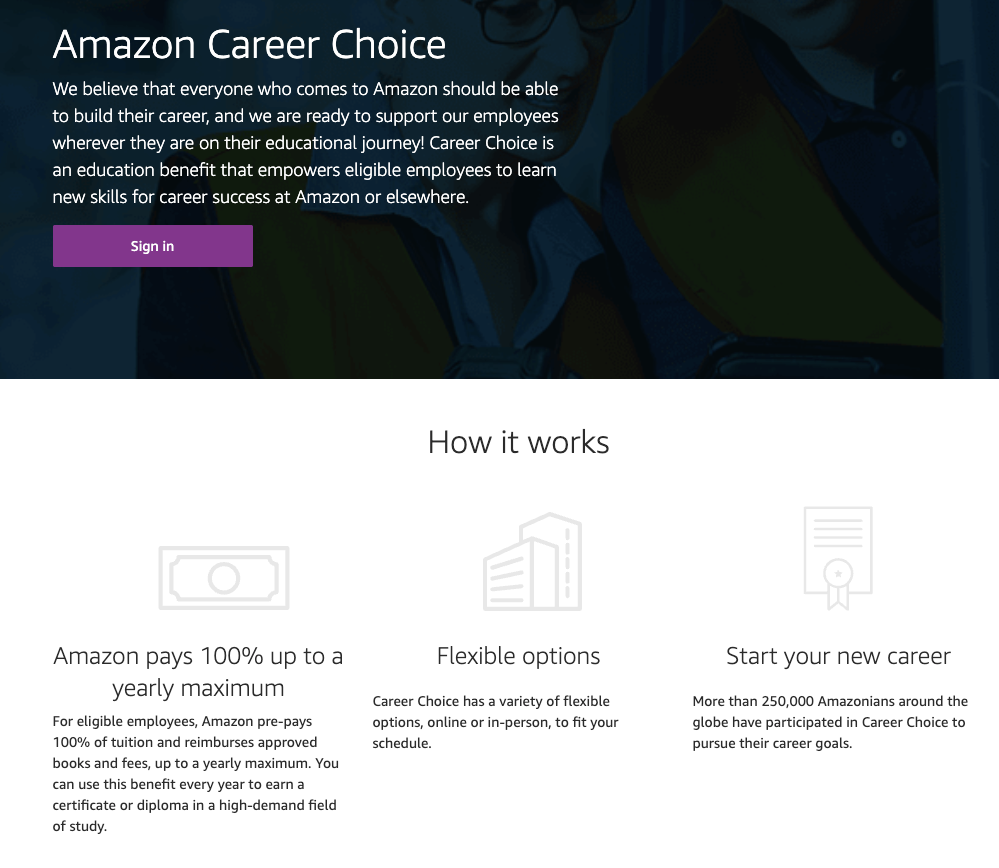
1. Amazon: turning upskilling into a strategic commitment at scale
Amazon is one of the most-cited examples of people development at scale, and for good reason.
What started in 2019 as an ambitious pledge to train 100,000 US employees had, by the close of the program in 2025, reached more than 700,000 employees globally, exceeding the original target by seven times.
The company also invested $1 billion from its Future Ready 2030 fund into Career Choice, covering everything from cloud computing and machine learning to healthcare credentials and software engineering for non-technical staff.
The scale is extraordinary, but the principle behind it is one any people leader can apply: remove barriers to learning, make development accessible to everyone from the warehouse floor to the corporate office, and treat education as something you invest in before you need it rather than after.
The career results back this up too. 75% of Career Choice program participants have used it to advance into higher-paying roles, with salary increases averaging 8.6% for those who progressed through the initiative.
When development is paired with genuine career progression, the investment compounds.
2. Wellabe: how a small insurance company transformed engagement through mentorship
Not every great people development story comes from a tech giant. Wellabe, a US-based insurance company, overhauled its mentorship program with impressive results, and the numbers are worth paying attention to.
When the company's Senior L&D Specialist arrived, the mentorship program was running on spreadsheets, guesswork, and somewhere between 20 and 30 hours of manual coordination per cycle, serving just 26 employees.
Spivey redesigned the entire approach by building four distinct mentoring tracks, each tailored to a different employee population: those seeking long-term development, those wanting casual peer connection, emerging leaders, and new hires in onboarding.
The result? Participation in mentorship quadrupled, employee favorability ratings climbed from 69% to 92%, and voluntary turnover remained steady even through a period of significant organizational change.
The lesson here isn't that mentorship software solves everything. It's that personalization and structure together (meeting employees where they actually are in their careers) dramatically increases the impact of development programs that might otherwise feel generic.
3. Microsoft: building a "learn-it-all" culture from the inside out
Microsoft's people development story is really a cultural story.
Under the shift championed by CEO Satya Nadella, the company deliberately moved away from a "know-it-all" culture toward what it calls a "learn-it-all" culture, and it embedded that mindset directly into how performance, recognition, and growth are managed.
Practically, this shows up in several ways. Microsoft uses peer learning circles, where employees with shared interests gather to exchange knowledge on specific skills, both technical and interpersonal.
It runs structured coaching and mentorship programs, where new hires can select senior mentors for one-on-one guidance.
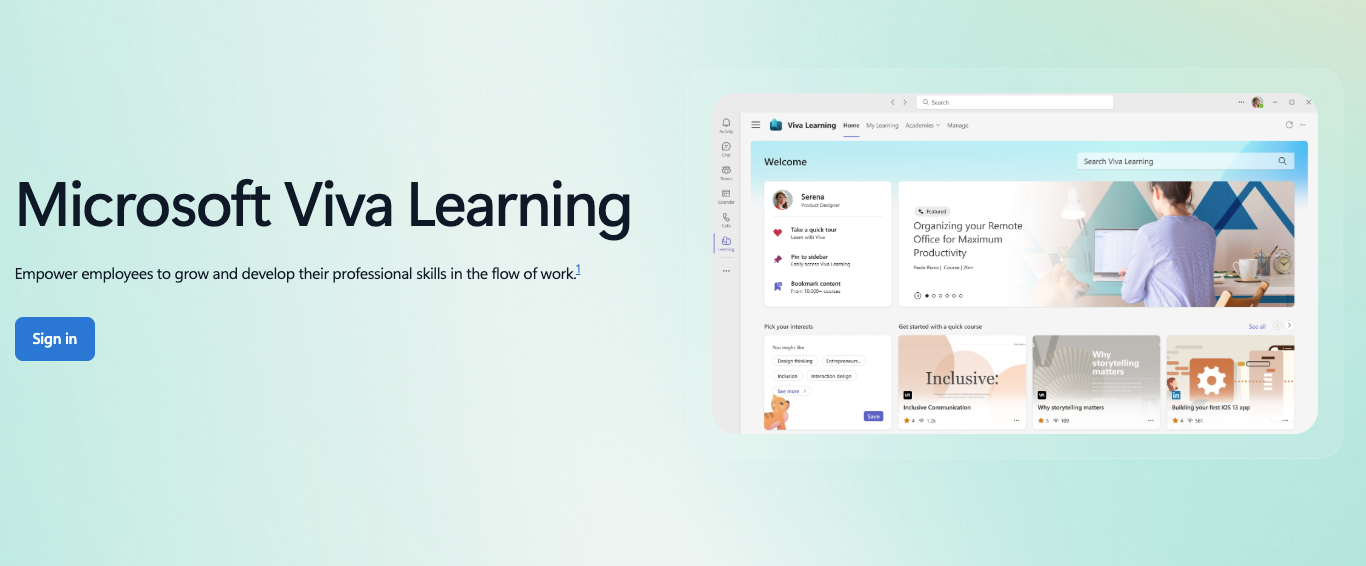
It uses AI-powered personalized learning recommendations within its own Viva Learning platform, so employees aren't wading through a generic content library but receiving suggestions shaped by their role, interests, and stated goals.
And it provides tuition support for formal education, from certifications through to postgraduate study.
What makes Microsoft's approach particularly instructive for people leaders is the intentionality behind the culture.
The mindset shift from knowing to learning is, in many ways, the most important development investment Microsoft has made.
4. Heineken: using reverse mentorship to build inclusive leadership pipelines
Heineken's approach to people development is notable because it's explicitly connected to inclusion and representation: two outcomes that are often treated separately from development but are, in practice, deeply intertwined.
The company launched its Inclusive Practices program in 2020, which has since grown to include Inclusion and Diversity councils, targeted leadership development programs designed to build a pipeline of female talent below senior management level, and representation requirements built into hiring and promotion processes.
One of the more distinctive elements is reverse mentoring, where employees at all levels mentor upward, giving senior leaders genuine insight into the experiences of colleagues at different stages of their careers and from different backgrounds.
The outcomes are concrete: 31% of Heineken's senior management roles are now held by women, a meaningful shift from where the company started.
And the Heineken USA CEO, Maggie Timoney, has spoken about reverse mentorship as a tool for both talent development and bias mitigation, recognising that expertise doesn't only flow from the top of an organization downward.
For people leaders thinking about how to connect development to broader workforce goals like equity and representation, Heineken's model shows what's possible when the two are designed together rather than as parallel workstreams.
5. Sonic Automotive: making internal mobility the default growth path
Sonic Automotive has become a frequently cited example of what serious investment in internal mobility can achieve.
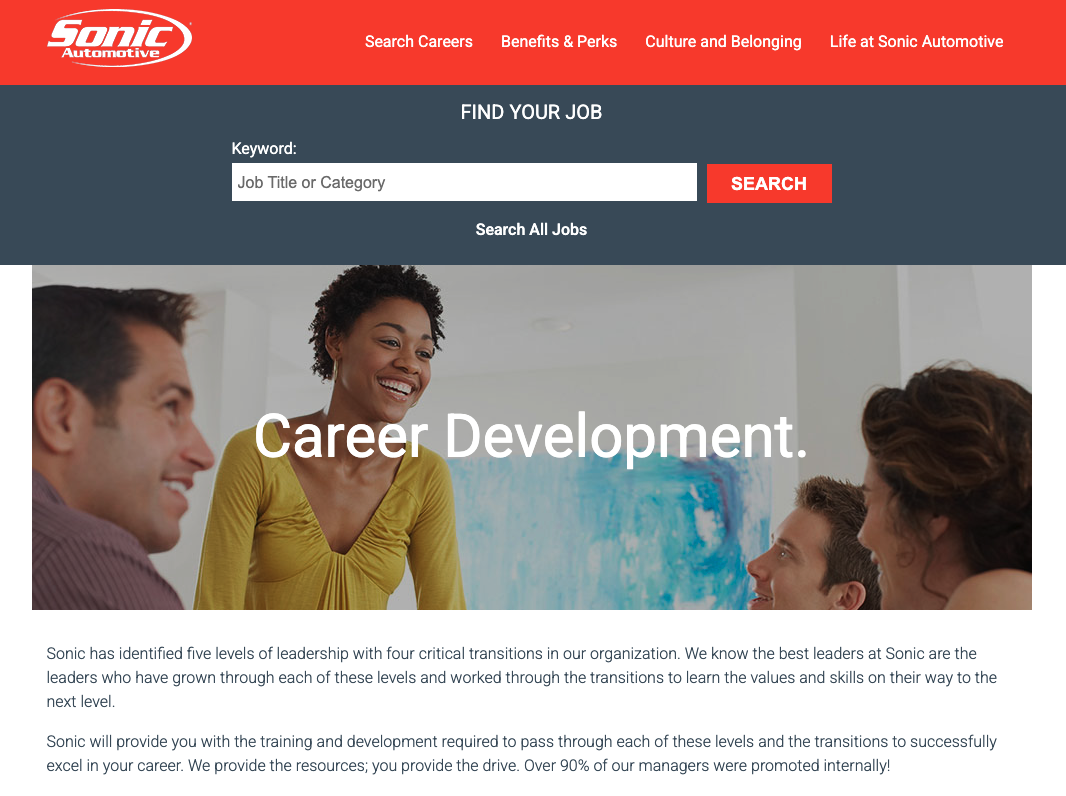
The automotive retail company built a skills-driven development model that has resulted in over 90% internal mobility at the general manager level, meaning the vast majority of their most senior operational leaders are developed from within rather than hired externally.
In an industry that has historically struggled with high turnover and talent shortages, this is a significant competitive advantage.
When employees can see that progression to the most senior roles in the organization is genuinely achievable from within (and when the company actively builds the development infrastructure to support that path) the retention and engagement effects are substantial.
The broader principle here maps directly onto what the research consistently shows: among organizations that prioritize career development, 64% use retention as a metric for measuring success, and those that invest in internal mobility as a deliberate strategy see longer average tenures and stronger engagement.
Sonic Automotive is simply one of the clearest practical demonstrations of that dynamic in action.
TL;DR: People development is the work, not an add-on to it
If there's one thing the data makes clear heading into the second half of this decade, it's that people development can no longer sit on the periphery of organizational strategy.
Global engagement is at historic lows, skills gaps are widening, and the nature of work is changing faster than most organizations can adapt due to technology.
So, the leaders who treat development as a core business function (rather than a nice-to-have) will be the ones who build organizations capable of thriving.
Become a free Insider member for access to exclusive content and ready-to-use templates designed to help you level up in your role.
 People Alliance